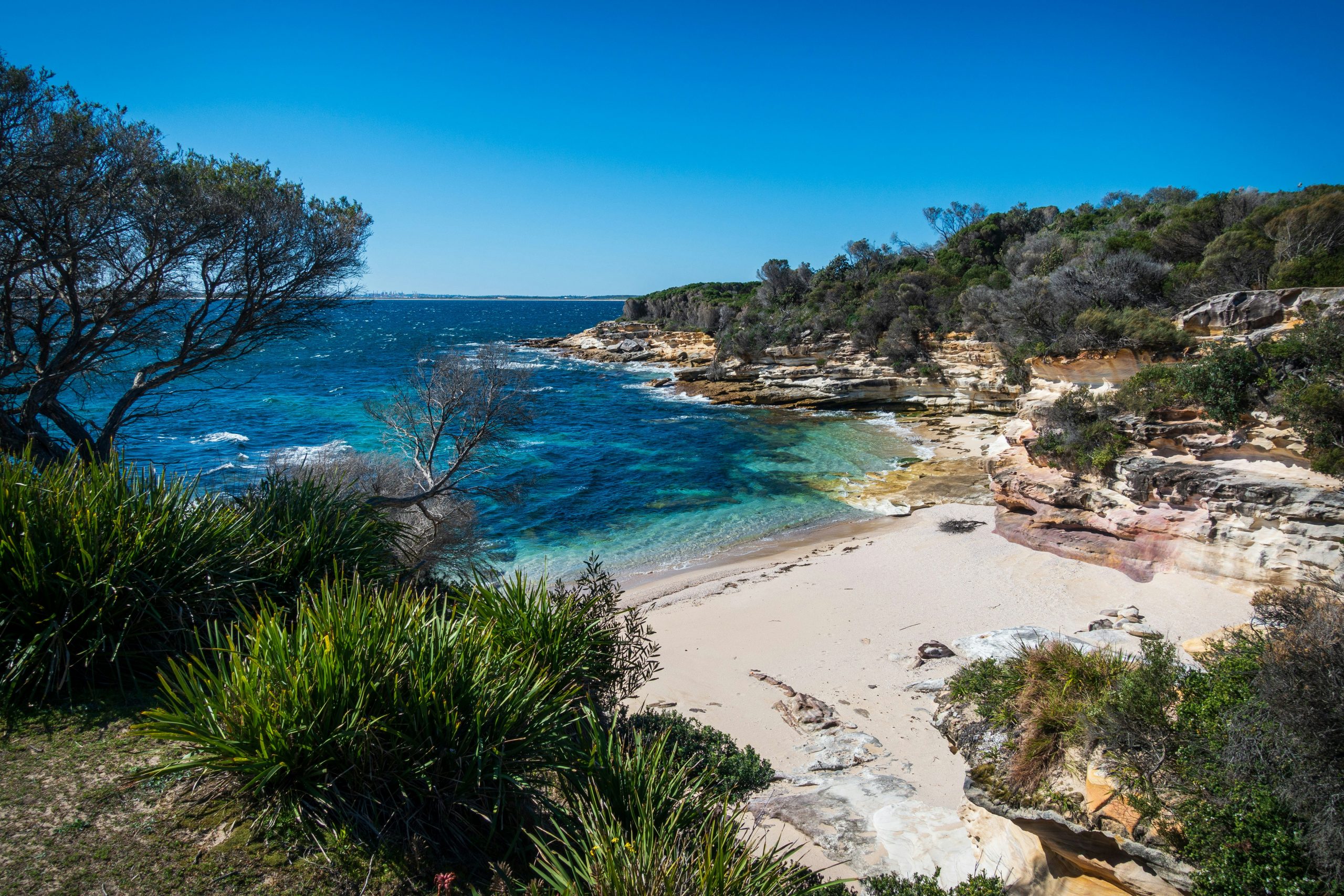
Most Sydney travel pieces approach the coast and the bush as two distinct missions. But that’s not the right way to look at Australia’s biggest city. The secret is devising a day that effortlessly transitions between dramatic coastal heath and eucalypt forests, because it’s that juxtaposition that sets Sydney’s scenery apart.
Why coast and wilderness belong in the same day
People always describe Sydney as “the beach city,” and for good reason. The Bondi-to-Coogee coastal walk is every bit the unbroken string of beach communities, sandstone headlands, and ocean pools that you were promised; Wylies Baths and the Bondi Icebergs pool are attractions entire of themselves and things most coastal cities would kill to have.
But there’s another side to the city, and it’s one that’s far less discussed. Regardless of which direction you go, whether 20 minutes north or 20 minutes south of the central business district, you are in genuine bush and river country – the kind of terrain where you’d expect to lose phone reception. Sydney is one of the only places on Earth where you can be standing on a wave-battered cliff in the morning and swallowed by eucalypt forest by early afternoon. Treating these as two separate day trips squanders the unique selling point of Sydney in its totality.
Give Royal National Park the morning it deserves
Located in the southern part of the city, Royal National Park is the perfect destination for a coastal-wilderness day. Dating back to 1879, it is the second-oldest national park globally, after Yellowstone only. This fact alone should be enough of a reason to convince you to spend more time here than just for a quick selfie stop. You’ll find yourself in one of the oldest protected wilderness areas in the world, located less than an hour drive from a bustling international metropolis.
For most first-time visitors, the top spot is Wattamolla: a lagoon, a waterfall, and a beach within a five-minute walk. The downside is that everyone else knows this, too. In summer, get there before 10 a.m. or you’ll be left strolling the car park while the mermaids have all the fun. Further along the park’s coastline to the south, Figure Eight Pools is even more tide-dependent – the uniquely shaped rock pools can only be seen during low tide, and the twenty-minute walk to get there is over jagged rocks that wash over during high tide. Don’t wing it: people get trapped on the rock shelf by unexpected waves.
Plan for at least half a day in Royal National Park. Rushing in 90 minutes before speed-skating back to Sydney isn’t going to give you much of a story to tell.
The northern side: a tighter, denser loop
If Royal National Park is the long, leisurely option, then the northern side of Sydney offers something more compact. Ku-ring-gai Chase National Park packs three genuinely different experiences into a loop that’s easy to drive in half a day.
Start at West Head Lookout, which delivers a panoramic view over Broken Bay and Pittwater that rivals anything on the coastal walk south of the city. From there, a short detour brings you to Aboriginal rock engravings that sit quietly in the bush, evidence of Guringai occupation stretching back thousands of years. These sites don’t get the promotion they deserve, partly because they require a bit of local knowledge to find and partly because they’re meant to be approached with some respect rather than treated as another photo backdrop.
Finish the loop with a climb to Barrenjoey Lighthouse at Palm Beach. It’s about thirty minutes’ drive from West Head, and the walk up is short but steep enough to earn the view: the Pacific Ocean on one side, the Hawkesbury River mouth on the other, and the narrow spit of Palm Beach stretched out below. Three landscapes, one loop, all within half an hour of each other by car. That density is rare, and it’s why this northern route works so well as a single unit rather than three separate outings.
Between May and November, humpback whales migrate along the coast, and headlands like Barrenjoey become genuinely useful whale-watching spots, not just scenic lookouts. If your visit falls in this window, build extra time into the headland stops – you’re not just taking a photo and moving on, you’re standing still and watching the water for a while. It’s worth it.
The Hawkesbury River is the part most guides skip
Many people think that if you head north of Sydney all you’ll find is beaches. But the Hawkesbury River is arguably one of the most ruggedly beautiful landscapes within day-trip reach of Sydney. The river slices through deep sandstone gorges, opening into coves and inlets that remain almost entirely undeveloped. There are roads along the river, but really, the best way to appreciate it is from the water – the ferry to cross the river, or a longer cruise, will expose you to cliffs and bushland that’s hidden from the roads.
The Palm Beach Ferry is the easiest way to get a taste of the lower reaches of the Hawkesbury. It’s just a short hop but it transports you to a place that’s flat out geographically and atmospherically different from the heave-ho beaches of the peninsula. For visitors who are piecing together a day of beaches and a trip to Ku-ring-gai Chase, adding the Hawkesbury is an often overlooked extra dimension.
A sample day that doesn’t waste hours in the car
Here’s how you can visit a bunch of the northern highlights and not spend half the day driving from one to the next:
Start early at Palm Beach, the ferry trip across (if you’ve not done it before, it’s worth doing once), or head inland. Then skirt the water going past Church Point, skip North Narrabeen, get to West Head Lookout and the rock engraving site before it’s too crowded, or the light gets harsh. Have lunch at a scenic river/bay spot. Finish the afternoon with the Barrenjoey Lighthouse walk, arranging it so you’re at the top when the light is at its best.
Beach, river, wilderness lookout, lighthouse headland in one day, near-zero wasted driving. But if you do this in the wrong order, you’ll be crossing your own tire tracks for half the afternoon.
Why a guide changes the math on multi-stop days
In reality, the day is anything but smooth. Wattamolla and West Head parking lots can be full by 10am, the ferry might not run early enough to line up with your plans, and driving between locations on unfamiliar roads eats into time you’d rather spend actually looking at the view. None of those things are a big deal alone. In combination, though, they’re the difference between seeing everything comfortably and rushing the last two stops because the first one ran long.
This is why a driver-guide, for all that it can feel like a lazy luxury, is often the most efficient way to experience these places in a single day. For travellers who’d rather not spend the morning checking tide charts and ferry schedules, it’s far easier to experience sydney’s wonders tours with AEA Luxury Tours in New South Wales than to coordinate every connection yourself. A private Sydney tour built around this coastal-wilderness contrast solves the actual logistics problem rather than just handing you a list of pretty places.
Local knowledge matters more than the guidebooks admit
A couple of Sydney’s best landmarks take a bit of local knowledge to fully appreciate. The Figure Eight Pools is the classic case in point – arrive at the wrong time and you’ll wonder what that wet group of rocks had over the internet to make it famous. The view at West Head that’s a five-minute walk from the car park beats the view 30 seconds from the car, but if you don’t know it’s there you’ll never know to look. And if you just show up at an Aboriginal rock art site, you’ll end up 99 percent clueless about what you’re seeing.
None of this is meant to gatekeep the landscape. It’s just a reminder that “spectacular” and “easy to find on your own” aren’t always the same thing.
End the day on the water
A great way to end a day in Sydney is to hop on the water, not the road. A view from the ferries across Broken Bay, or a kayak in the flats of Pittwater, gives you access to the sandstone cliffs and hidden beaches from a perspective that’s quite different from that of roadside sightseeing. You can also see wildlife – sea-eagles, the odd pod of dolphins – that the headland lookouts don’t report.
It’s a nice counterpoint, too. You start the day on your feet, climbing headlands and wandering along the tops of the cliffs. You finish it low on the water, looking back up at the country you’ve just crossed.
Sydney doesn’t need another top-ten list of pretty beaches. What it needs is a plan that treats the coast, the bush, and the river as one connected landscape, because that’s exactly what they are once you stop driving past them separately.